

- What Is a Cold Wallet?
- Why Cold Wallets Exist: The Real Scale of Crypto Theft
- Buying Guides vs. Self-Doubt: One Channel, Several Angles
- Setting One Up: The Self-Custody Content
- Common Mistakes When Using Cold Wallets
- How to Choose and Set Up a Cold Wallet
- Is a Cold Wallet Worth It? Weighing It Honestly
- Conclusion: The Hardware Isn’t the Hard Part
Search “what is a cold wallet” and you’ll find one interesting pattern: some of the most-watched videos telling you to buy a specific cold wallet, and some of the most-watched videos telling you to “think twice” or that you’ve “been misled” about needing one, come from the exact same channel. That’s not necessarily inconsistency; it’s a security-focused creator revisiting the same question from different angles over time. And that’s worth reading carefully rather than picking one video and stopping there.
What Is a Cold Wallet?
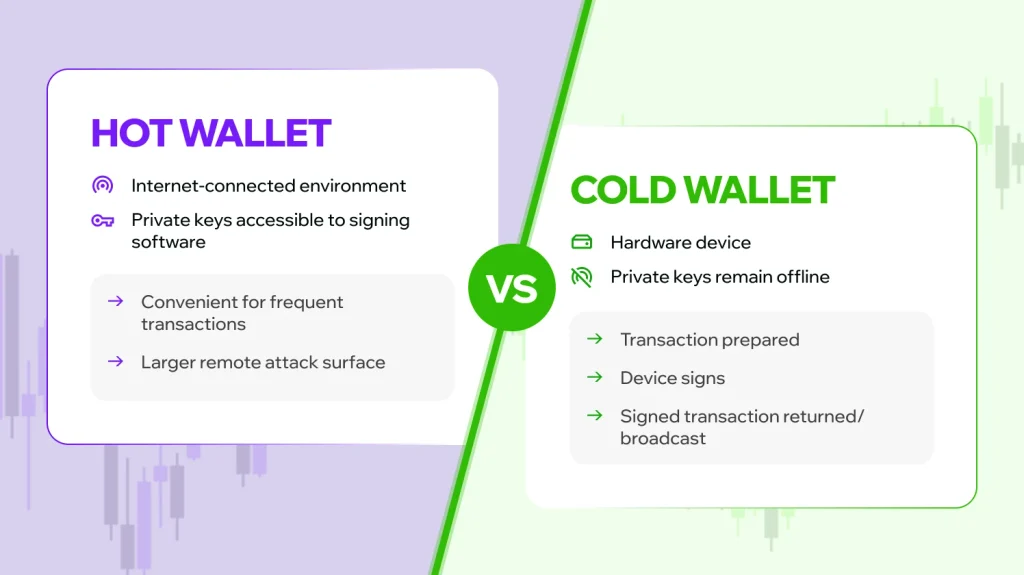
A cold wallet keeps the private keys controlling your crypto offline when they are not being used to sign a transaction. That one detail, the offline part, greatly reduces the remote-attack surface available to malware. It does not eliminate phishing, malicious transaction approvals, compromised recovery phrases, or every supply-chain risk. Binance Academy’s “What are Crypto Wallets, Explained for Beginners” (Binance Academy, YouTube) covers the hot-vs-cold distinction from a major exchange’s own education arm. The same core explainer format shows up in other languages too, including an Arabic-language walkthrough of the concept (مال بيديا, YouTube), which underlines that this is a global search topic, not an English-only one.
Why Cold Wallets Exist: The Real Scale of Crypto Theft
This isn’t an abstract security debate. Chainalysis’s 2026 Crypto Crime Report found that hacks and exploits stole roughly $3.4 billion in cryptocurrency in 2025. North Korea-linked hackers alone were responsible for about $2.02 billion of that, a 51% increase from 2024. The February 2025 Bybit hack accounted for nearly $1.5 billion in a single incident, the largest crypto heist on record.
And the losses are getting more concentrated, not less. The top three service hacks of the year accounted for 69% of funds stolen from crypto services (Chainalysis, 2026 Crypto Crime Report). But that does not mean nearly all losses came from ordinary hot wallets. Chainalysis also recorded 158,000 personal wallet compromises affecting at least 80,000 victims and causing $713 million in losses.
The Bybit incident is an especially important caveat. Attackers targeted the signing interface used during a transfer from an Ethereum multisig cold wallet and caused the signers to approve a malicious transaction. The private keys did not have to be stored in a conventional online hot wallet for the theft to succeed. Cold storage reduces direct key exposure, but the signing process and the information shown to the person authorizing a transaction still matter.
Buying Guides vs. Self-Doubt: One Channel, Several Angles
“Best Cold Wallet 2026 – My Ranking” (Nordic Crypto, YouTube) takes the straightforward comparison-shopping approach. But the more interesting case is Cyber Scrilla. The same channel has published “How to Choose the BEST Cold Wallet for 2026,” “If I Started Using a Cold Wallet in 2026, I’d Start HERE!,” “Think Twice Before Choosing a Cold Wallet…,” and “STOP Buying Cold Wallets for ‘Security’! [You’ve Been Misled]” (Cyber Scrilla, YouTube), buying guides and contrarian warnings side by side.
Read individually, they look like opposite opinions. Read together, they read more like a creator stress-testing their own advice over time, a useful habit to copy as a viewer rather than treating any single upload as the final word.
Setting One Up: The Self-Custody Content
“How to Use a Coldcard Hard Wallet for Bitcoin Self Custody” (Natalie Brunell, YouTube) goes further than a buying guide into setup and self-custody practice, the step that most “best cold wallet” content skips. And it’s worth noting that the setup, signing, and recovery processes can create the very vulnerabilities the hardware was bought to reduce.
Common Mistakes When Using Cold Wallets
The most common mistake is buying a device from an unauthorized or unverified reseller. A compromised device with a preset PIN or recovery phrase defeats the entire point before you’ve made a single transaction. And storing the recovery phrase digitally, as a photo, cloud note, or text file, recreates the online exposure the device is meant to reduce. Two mistakes, and you’re back to square one.
There’s also a mindset problem. A lot of people treat “I bought a cold wallet” as the finish line. But the 2025 theft data, including the Bybit incident, tells a more complicated story: large losses can result from failures in signing interfaces, access controls, or operational processes even when a wallet is labeled “cold.” The hardware does not have to fail for the process around it to be compromised.
And here’s one most people skip entirely: checking recovery. Send a small test amount, then use the wallet manufacturer’s built-in recovery-check function if one is available. A full restore can also verify a backup, but it should be performed only in a secure environment on a trusted spare or a properly erased compatible device. The recovery phrase should never be entered into a website, ordinary computer, or phone.
How to Choose and Set Up a Cold Wallet
Start by buying directly from the manufacturer or a verified authorized retailer. If a marketplace is used, confirm that the seller is the manufacturer’s official or authorized store. For a traditional seed-based wallet, generate your PIN and recovery phrase during first setup and never accept a device that arrives with either one already provided. Write the recovery phrase down physically (paper or stamped metal), and never type it into a website, computer, or phone or photograph it.
Then test the setup with a small amount: send a small deposit, verify that you can access it, and check the recovery backup using the manufacturer’s approved process before trusting the device with anything you’d be upset to lose. This step gets skipped constantly. Finding out that a backup is incomplete or incorrect during an actual device failure is the worst possible time to discover it.
Is a Cold Wallet Worth It? Weighing It Honestly
The Advantages: A properly used cold wallet greatly reduces the remote-attack surface around private keys. An attacker generally cannot extract the key simply by compromising an internet-connected computer or exchange account. Given that roughly $3.4 billion was stolen across crypto hacks and wallet compromises in 2025, that’s not a small distinction.
The Limitations: Cold wallets add friction for active trading, cost money upfront, and traditional self-custody setups have no “forgot password” recovery if both the device and every valid recovery backup are lost. A stolen recovery phrase or maliciously approved transaction can also bypass the protection without requiring physical access to the device. Cold wallets are generally better suited to long-term holdings than to positions being adjusted daily.
CEO & Co-Founder, Versus Trade – Vitalii Bulynin
(paraphrased from FXStreet interview, July 15, 2026)
Conclusion: The Hardware Isn’t the Hard Part
Cold wallets are a sound response to a crypto theft problem that reached roughly $3.4 billion in 2025. But the content pattern in this space, buying guides and backlash videos from the very same creators, points at something worth sitting with: the hardware is the easy part.
Buying from the right source, generating your own recovery phrase, protecting it, verifying transaction details, and checking recovery before it matters are where cold storage succeeds or fails. The device can’t protect you from skipping those steps.
CFDs are complex instruments and come with a high risk of losing money due to leverage. This content is educational and should not be treated as financial advice.
Microsoft vs Apple. Bitcoin vs Gold. Nasdaq 100 vs Oil. With Versus Pairs, you decide which side comes out stronger.

- What Is a Cold Wallet?
- Why Cold Wallets Exist: The Real Scale of Crypto Theft
- Buying Guides vs. Self-Doubt: One Channel, Several Angles
- Setting One Up: The Self-Custody Content
- Common Mistakes When Using Cold Wallets
- How to Choose and Set Up a Cold Wallet
- Is a Cold Wallet Worth It? Weighing It Honestly
- Conclusion: The Hardware Isn’t the Hard Part